Sound Is the Last Unfair Advantage in Branding. Don't Waste It.
Your brand is being heard before it's seen. The question is whether you placed that feeling there on purpose.
Our brains process sound ten times faster than visual stimuli.
And at any given moment in living rooms, airports, cafes and subway cars, your brand is being heard before it is seen. A smart speaker answers. The streaming platform loads. An ad plays before anyone has looked up from their phone or laptop. Sound lands first. Before a logo registers, a color palette lands, before anyone has read the first world of your tagline, your audience has already felt something. The question is whether you put that feeling there on purpose. Most brands didn’t. A major brand may spend $50 million on a new visual identity. Working with the best branding agencies in the business, they build a robust strategic foundation, commission a brand book, socialization and governance. Build a design system with typography rules, color hierarchies, motion behavior and guidelines for expansion and evolution from signage to website, product to physical. Meanwhile, someone exports a video with $800 stock music that was chosen on Friday afternoon before delivery. Hold music that no one approved. App notifications that speak for iOS or Android’s sonic ecosystem rather than their own brand voice. Visual identity has been systematized for fifty years. Sonic identity is where visual was in 1970. In 1990, your brand had three touchpoints — print, TV and Radio. Today, you need to show up for different audiences with different sensibilities, across streaming, broadcast, social, podcast, product and app ux, retail, events, experience, smart speakers, content, content, content. At every moment your brand either sounds as you want to be heard. Or it doesn’t. Most brands sound like five different companies. Not because nobody cares. Because there isn’t a system.
Do this now.
Pull up your brand’s last five audio touchpoints.
A TV spot, your social reels, an app notification, a podcast ad, retail playlist, an investor call, your employee onboarding video. Play them back to back. Do they sound like the same brand? Do they sound like you?

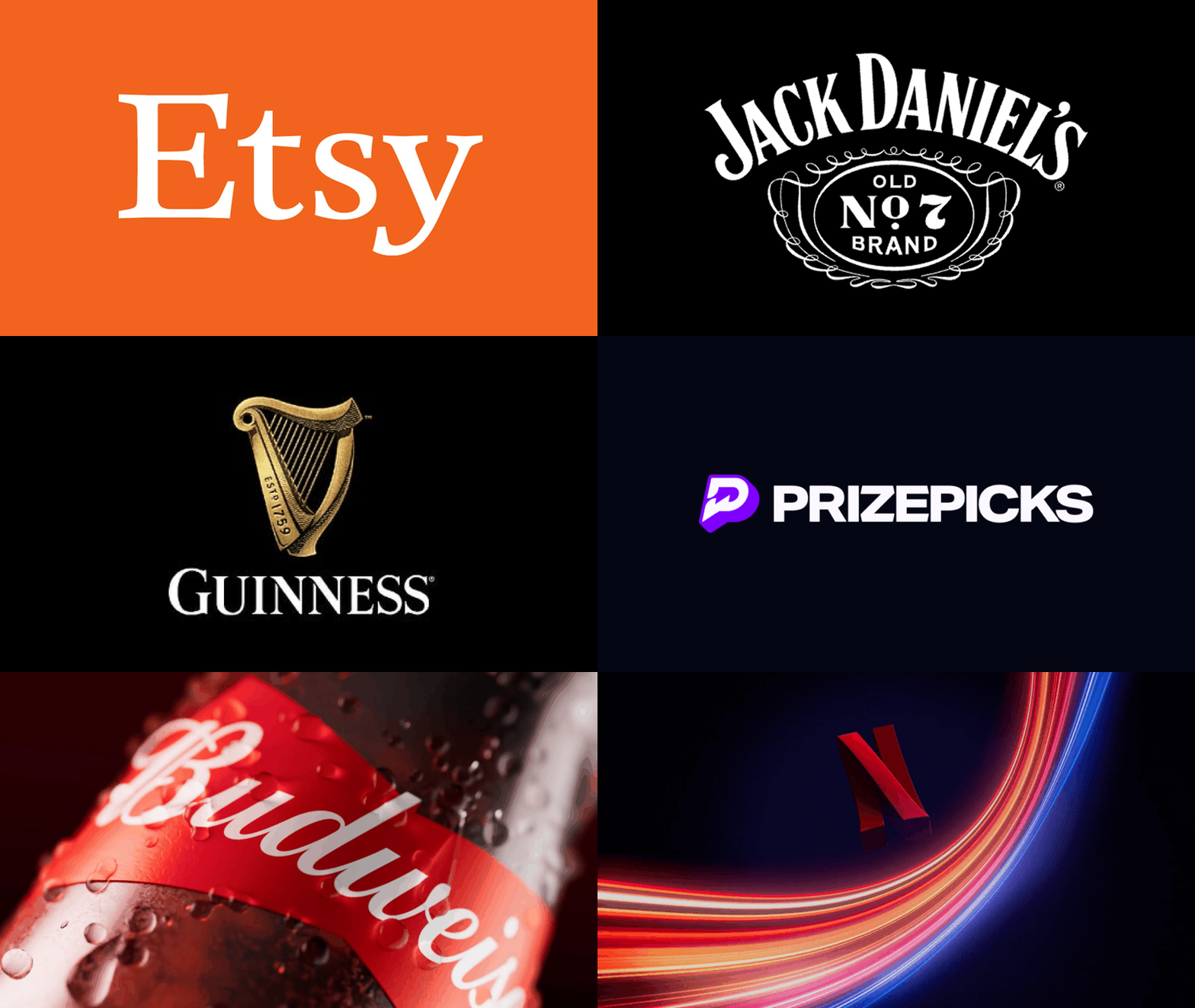
Apple. McDonald’s. Netflix.
The brands you can hum built systems. These are engineered to work from Dolby Atmos to your phone speaker. Netflix’s Tudum flexes from your laptop to the cinema with a robust toolkit of sonics that meet audiences in their moment. McDonald’s system flexes across genre, instrument and culture — and even holds up with Succession’s Brian Cox lazily mumbling his way through the melody. These executions weren’t discovered, they were architected. When we partnered with CBS, the challenge wasn’t creating a sound. It was unifying one. News, sports, entertainment — each division had its own audio language. We translated the classic announcer voiceover “This is CBS” into a modular sonic expression that could flex across formats and contexts without losing coherence. The system has evolved across every corner of CBS from an eerie theremin for Ghosts, epic drums for survivor, and the brass band fervor for the NFL. And for the first time in 100 years, CBS surpassed NBC and the most recognized sonic brand in broadcast television. Source: SoundOut Survey.
→
Iconic Brands Build Ecosystems
A sonic logo is not a sonic brand. A sonic brand is a system — from AirPods to stadiums, from a three-second mnemonic to the sound of every user interaction in product and experience. It holds together. And the equity compounds.
It is easy to score a spot, campaign. The question is whether you’re building disparate moments or a sonic ecosystem.
Unfair advantages don't last forever.
In 2005, having a good website. In 2010, being on social. In 2015, a brand podcast. Sonic strategy is in that window now. The brands that move first will have a years-long head start on recognition, recall, and emotional resonance. Three things you cannot buy retroactively.
AI is accelerating this. Audio content is being generated at a scale no brand team can match through taste alone. The brands with deliberate sonic systems will stay coherent under that pressure. The rest generate noise.
If you read this and thought 'we have a fragmented audio problem' — you're not alone! We built a free 30-minute Sonic Health Check specifically for this conversation. We'll listen to how your brand sounds across five touchpoints and tell you honestly what we hear. Sign up for a free today.
Similar content
Sound Strategy: How to Talk Music For Non-Musicians
by Marina Kagan

Hackable Audio: Crafting Sonic Puzzles for Google
by Charlie Blasberg
Creating Sounds That Help Products Thrive
by